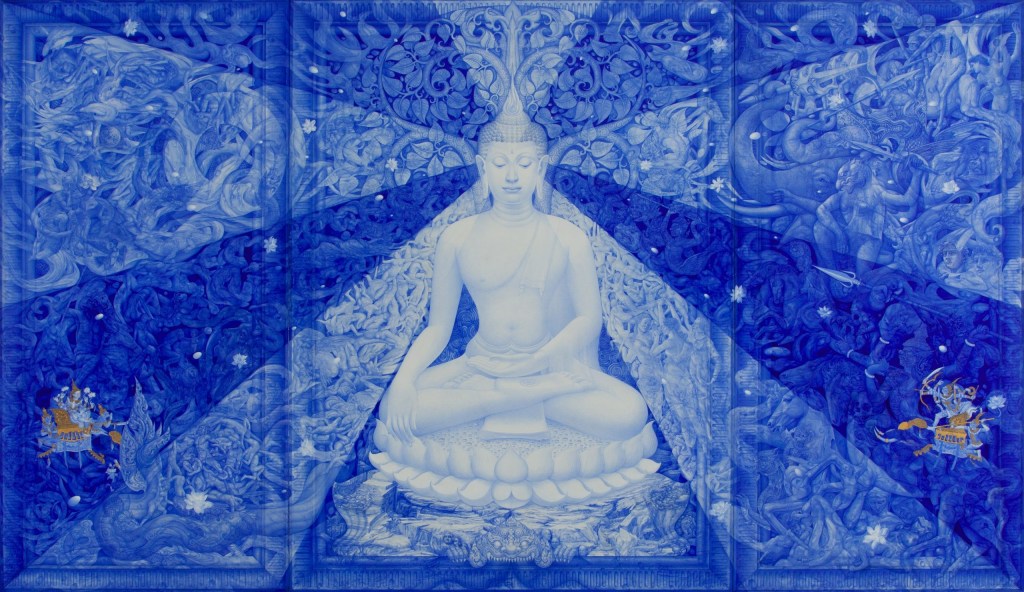
The Divine Flame That Burns in Every Human Soul
There is a force older than any religion, deeper than any scripture, and wider than any single human life. The ancient Greeks called it Christos — the Anointed One. But long before that word existed, sages in India, Egypt, and China were pointing at the same reality with different fingers. Christ Consciousness is not the exclusive property of Christianity. It is the highest state of awareness available to all human beings and it has been achieved, taught, and transmitted across every culture that has ever seriously asked what a human being can ultimately become.
To understand it clearly, we must first correct a common mistake.
Christ Is Not a Name — It Is a State of Being
Jesus was not born with the surname “Christ.” The word Christos is Greek for “the Anointed One” — a title describing a state of divine completion.
When esoteric writers speak of Christ Consciousness, they are describing a condition of awakening that can, in principle, be reached by any human soul willing to pay the price of transformation.
Helena Petrovna Blavatsky, the nineteenth-century founder of the Theosophical Society and one of the most influential occult scholars in modern history, was explicit on this point. In The Secret Doctrine, she argued that “the Christ principle” is a universal force present in every human being as a latent seed awaiting germination. It belongs to no single religion. It is, in her words, “the Logos incarnate in Humanity.”
Rudolf Steiner, the Austrian esotericist and founder of Anthroposophy, developed this further. He described the Christ event as the pivotal moment in Earth’s spiritual evolution not because Jesus was the only awakened being, but because the Christos principle descended into matter more fully at that moment than at any previous point in history.
Before that event, he argued, the same principle had expressed itself through other great initiates. Buddha was among the most complete.
Buddha Achieved It First
This is the statement that surprises most people raised in Western religious traditions but the occult scholarship supports it clearly.
Gautama Buddha lived approximately five centuries before Jesus of Nazareth walked the roads of Galilee. By the time Jesus was born, Buddhist monasteries had already existed for hundreds of years across India, and Buddhist missionaries had reached as far as Egypt and the Mediterranean world.
The Buddha’s awakening under the Bodhi tree: his complete release from the suffering caused by ego-identification, his recognition of the universal nature of mind, his overflowing compassion for all living beings, is structurally and experientially the same achievement that the Christian mystical tradition attributes to Christ Consciousness.
Annie Besant, Blavatsky’s successor as president of the Theosophical Society, wrote in Esoteric Christianity that Buddha and Christ were expressions of the same cosmic principle operating through different vessels in different ages. She described the Buddha as having achieved the full flowering of divine consciousness centuries before the Christian dispensation, adding that his teachings on compassion (karuna) and loving-kindness (metta) were expressions of the same divine force that Paul would later call agape — the unconditional love at the heart of Christ Consciousness.
Manly P. Hall, whose encyclopedic work The Secret Teachings of All Ages remains one of the most thorough compilations of esoteric knowledge ever compiled, wrote that “the Buddhas and the Christs are members of the same brotherhood, differing in name and outer form, but identical in the divine principle they embody.“
The Bodhi tree and the Cross are, in the language of symbol, the same mystery: the death of the separate self and the resurrection of universal consciousness.
The conclusion is clear: Christ Consciousness is not a Christian invention. Buddha demonstrated it before Jesus was born. Jesus demonstrated it with such totality within the Western world that his name became permanently fused with the principle itself.
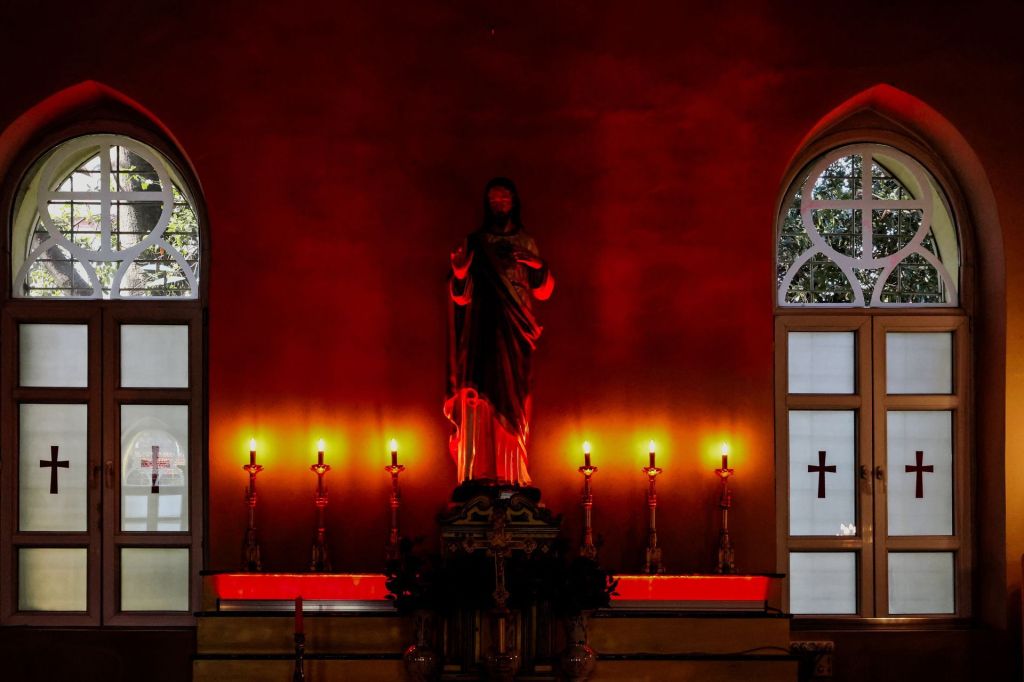
The Perennial Flame: One Truth, Many Names
Every authentic mystical tradition carries its own map of this same territory.
In Hinduism, it is the realisation that Atman (the individual soul) is identical to Brahman, the universal divine consciousness.
The Upanishads encode this in three words: Tat Tvam Asi: “That thou art.” You are not a creature separate from the divine, looking up at it from a distance. You are it, temporarily wearing the costume of a limited self.
In Sufism, the mystical heart of Islam, the highest station of the human being is Al-Insan al-Kamil — the Perfect or Universal Human.
Ibn Arabi, the twelfth-century Spanish-born mystic whom many consider the greatest metaphysician Islam ever produced, taught that the perfected human is a living mirror in which all the divine attributes are fully reflected. This is the Sufi name for Christ Consciousness.
In Kabbalah, the Jewish mystical tradition, the primordial divine image (Adam Kadmon) represents the original template from which all souls descend. The spiritual path is the process of restoring the soul to this original wholeness, rising through the sefirot of the Tree of Life until the Crown, Keter, is reached. This crown is the Kabbalistic equivalent of what the Christians call the mind of Christ.
What the State Actually Feels Like
The mystical literature across traditions agrees on the qualities that naturally arise in a consciousness that has genuinely touched this state. They are not moral rules to be followed. They are the organic fruits of a transformed inner condition.
Unity perception is primary. The individual no longer experiences themselves as a separate fragment in a universe of other fragments. The boundary between self and world becomes transparent. Reality is perceived as a single living field in which all apparent differences are surface expressions of one underlying consciousness.
Unconditional love follows naturally. The Greek New Testament calls it agape — a love that asks nothing in return because it flows not from personal need but from the nature of the awakened consciousness itself. This is not a feeling one generates. It is what remains when the ego’s constant demand for personal advantage is finally stilled.
Fearlessness is another mark. The ego’s deepest terror is its own dissolution, the ending of the separate self. Christ Consciousness, having already passed through that dissolution, has no remaining ground for existential fear. Paul, writing from within this experience, declared in his letter to the Philippians: “I have learned, in whatsoever state I am, therewith to be content.” This is not resignation. It is the peace that is native to a consciousness that has found something in itself that cannot be taken away.
The Difficulty of the Pearl
The traditions are equally clear that Christ Consciousness is not acquired easily.
Gurdjieff, the influential twentieth-century esotericist, taught that the ordinary human being lives in a condition of mechanical sleep — driven by habit, conditioned reaction, and unconscious impulse, never once exercising genuine will or genuine love.
His entire teaching system was designed around one goal: waking up, and he was notoriously unsentimental about the cost. The ego does not surrender gracefully. It must be seen through, again and again, in increasingly subtle layers.
This is the inner meaning of the Cross: not a historical atrocity, but a map of transformation. The ego is crucified. The Christ (the universal, divine consciousness) is resurrected in its place.
The Living Possibility
Christ Consciousness is not a relic of a more spiritual age. It is not the exclusive achievement of avatars and saints safely enclosed in stained-glass windows. The esoteric traditions teach unanimously that it is the destiny of every human soul — the direction in which all of evolution, inner and outer, is moving.
What Buddha demonstrated five centuries before Christ, and what Jesus demonstrated at the turning point of Western history, was not a private miracle. It was a possibility held out to the whole of humanity. A demonstration. A proof of concept.
Blavatsky, Steiner, Hall, Besant — all the serious occult scholars who investigated this question arrived at the same conclusion: the Christos principle sleeps in every human heart as a seed sleeps in winter soil. The spiritual path, regardless of what tradition it wears on the outside, is nothing more or less than the long, demanding, ultimately glorious process of learning how to let it grow.
“The Christ is born in us every moment we choose truth over comfort, love over fear, and presence over habit.”
 The Seat of Saints