Kabbalah offers a rich framework for self-understanding and spiritual growth that can be woven into everyday life. Here’s how:
1. Work with the Tree of Life as a Map of Self
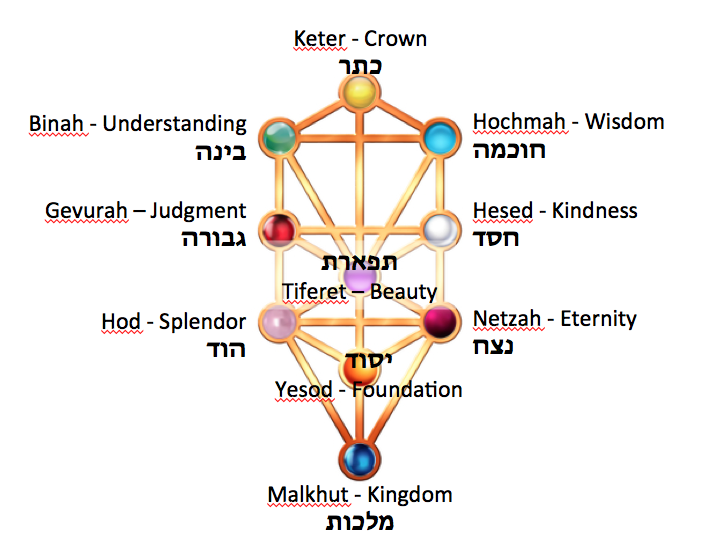
The Etz Chayyim (Tree of Life) with its ten Sefirot isn’t just cosmological — it’s a map of your own psyche. Each day, reflect on which Sefirah you’re operating from:
- Overwhelmed and reactive? You may be stuck in Gevurah (severity/judgment) without the balance of Chesed (loving-kindness).
- Scattered and unfocused? Work to draw down Binah (understanding) to structure your thoughts.
- Lacking willpower? Invoke Tiferet (beauty/harmony) — the heart center — to align intention.
A simple daily practice: pick one Sefirah in the morning and consciously try to embody its quality throughout the day.
2. Practice Tzimtzum (Contraction) in Relationships
The Lurianic concept of tzimtzum — God contracting to make space for creation — has a direct personal application: make space for others to exist fully. In conversation, practice withholding your immediate reaction. Listen completely before responding. This is tzimtzum as an act of love.
3. Use the Hebrew Letters as Meditation Objects
Each of the 22 letters in Kabbalistic tradition carries a specific energy, number, and archetype. Meditating on a single letter — its shape, its sound, its numerical value (gematria) — can serve as a powerful focusing tool. Even just writing the letter Aleph (א) and sitting with it for five minutes cultivates presence.
4. Apply Tikkun Olam as Daily Ethics
Tikkun Olam — “repair of the world” — means every ethical act you perform has cosmic weight. This reframes mundane decisions: being honest in a business deal, showing patience with a difficult person, or giving charity aren’t just social niceties — they are acts of repair that mend fractures in the fabric of existence.
5. Work with the Four Worlds
Kabbalah describes four levels of reality — Atziluth (emanation), Beriah (creation), Yetzirah (formation), and Assiyah (action). You can apply this framework to any project or goal:
| World | Level | Question to ask |
|---|---|---|
| Atziluth | Pure intention/spirit | Why do I really want this? |
| Beriah | Conceptual | What is the big picture vision? |
| Yetzirah | Emotional/planning | How do I feel about it? What’s my plan? |
| Assiyah | Physical action | What do I actually do today? |
Starting from the top ensures your actions are rooted in genuine purpose rather than ego or impulse.
6. Gematria as Contemplative Tool
Gematria (the numerological system of Hebrew) can be used to find hidden connections between concepts. Even if you don’t read Hebrew, practicing the spirit of gematria — looking for the hidden order beneath surface appearances, noticing patterns and correspondences — trains a more contemplative, layered way of seeing the world.
7. Shabbat as Weekly Reset
Even if you’re not observant, the Kabbalistic understanding of Shabbat is profound: one day of deliberate cessation from creation, ego-striving, and productivity. It’s a built-in reminder that you are not what you produce. Weekly rest is a spiritual discipline, not laziness.
8. The Omer Counting as Character Development
The 49-day period between Passover and Shavuot (Sefirat HaOmer) is structured in Kabbalistic tradition as a systematic refinement of character — each week dedicated to a different Sefirah, each day a sub-quality. This is essentially a 7-week moral and psychological workout. You can adapt this at any time of year as a personal 49-day character development program.
The essence of practical Kabbalah is this: the inner and outer worlds mirror each other. Work on yourself and you affect reality. Act with intention in the world and you transform yourself. That reciprocal relationship — between the soul and the cosmos — is what makes Kabbalah not just a mystical system but a genuinely livable one.
 The Seat of Saints